

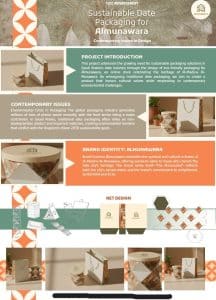
Picture the final virtual meeting: Design students in Saudi Arabia unveiling 3D-modeled packaging prototypes for dates—complete with multi-compartment trays and cultural motifs—while their chemistry peers in Pakistan watched the tangible results of their rigorous feasibility studies come to life. This wasn’t a hypothetical exercise. It was a professional-grade demonstration of how international teams collaborate to transform agricultural waste into sustainable solutions, and it represents exactly the kind of transformative learning the Global Course Connections program makes possible.
The Saudi-Pakistani Sustainable Packaging Project
When Dr. Hina Abid’s Industrial Chemistry course at Forman Christian College partnered with Dr. Sajid Khalifa’s Contemporary Issues in Design class at Effat University, they created what became known as the “Waste-to-Wonder” Cross-Cultural Innovation Initiative. The ambitious project challenged students to develop sustainable packaging from date palm fronds—an abundant agricultural byproduct in the region.

The collaboration was genuinely interdisciplinary. Pakistani chemistry students investigated the chemical composition, processing methods, strength, biodegradability, food safety, and cost-effectiveness of date palm fronds. Their comprehensive feasibility study provided the technical foundation that Saudi design students needed to move through ideation, 3D modeling, and prototyping phases. The result? What Dr. Khalifa describes as “very creative, realistic, and practical packaging solutions” that merged scientific rigor with aesthetic innovation.
Cultural Exchange Through Collaborative Problem-Solving
While the project deliverables were impressive, the deeper impact lay in intercultural learning. Students didn’t just exchange pleasantries about their respective cultures—they gained insights through the demanding work of solving a complex problem together. “By working together on a project that combined their disciplines, students from Saudi Arabia and Pakistan gained valuable insights into each other’s cultural values and perspectives,” Dr. Khalifa observed.
Dr. Abid noted that the experience “helped students grow by thinking creatively and learning to collaborate with peers from different cultural backgrounds,” reinforcing essential skills in teamwork, cross-cultural communication, and innovative problem-solving. The final meeting, where students reflected on how international teams achieve shared outcomes, transformed abstract concepts of global citizenship into lived experience.
The Architecture of Success
What enabled this partnership to thrive? Both instructors point to several key factors. The integration of two disciplines allowed students to leverage diverse perspectives, enhancing creativity and innovation. Interactive workshops, ice-breaking activities, and joint assignments created multiple touchpoints for engagement. Familiar technology platforms like Zoom and Google Docs removed barriers to collaboration, while clearly defined goals and rubrics provided necessary structure.
Perhaps most importantly, both faculty members emphasized flexibility and clear communication. “I would advise future faculty to embrace adaptability, maintain clear communication with partner institutions, and actively support students in collaborative projects,” Dr. Abid recommends.
Professional Rejuvenation for Faculty
The experience proved transformative for the instructors themselves. Dr. Abid witnessed firsthand “how mutual effort, communication, and shared creativity can lead to successful joint projects,” reinforcing the value of global knowledge exchange. For Dr. Khalifa, the “profound cultural exchange between students from Saudi Arabia and Pakistan” enriched his own practice as an educator.
Your Turn to Connect
“This Global Course Connect experience was highly rewarding,” Dr. Abid reflects. “It demonstrated the benefits of international collaboration and highlighted how even small groups of motivated students can achieve meaningful outcomes.”